
What happened?
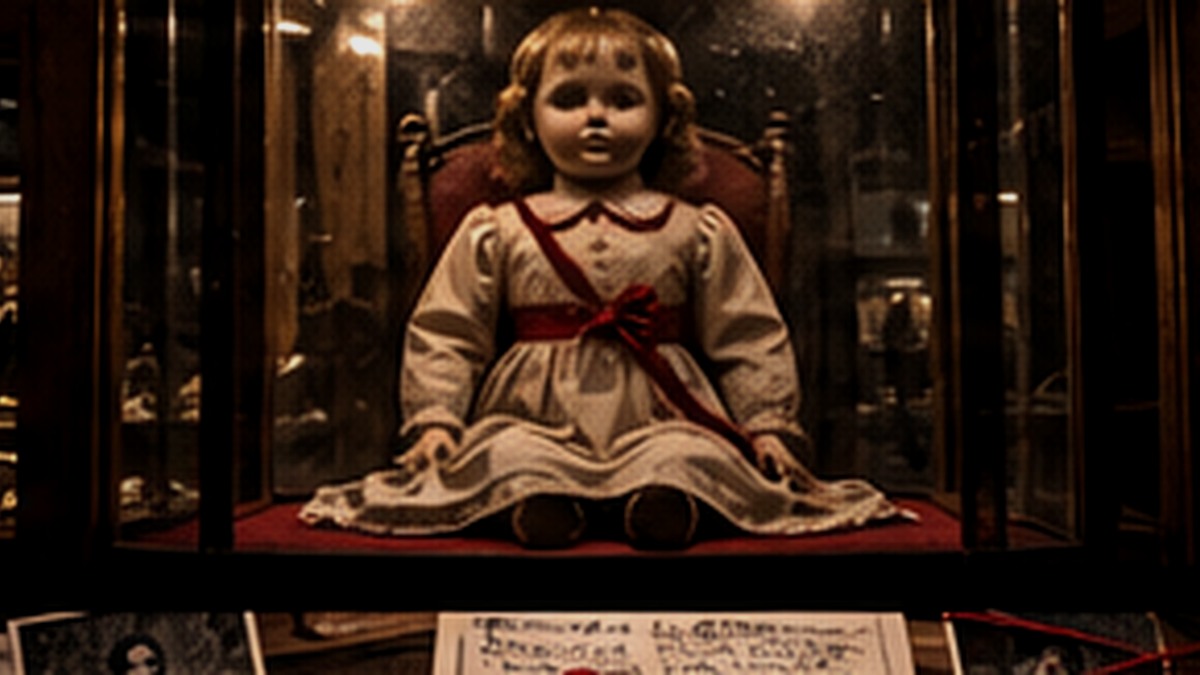
The Annabelle story became widely known through the paranormal investigators Ed and Lorraine Warren and later through films. The real object described in their accounts is a Raggedy Ann doll, not the porcelain doll depicted in the movies. Claims about movement, messages and dangerous activity rely heavily on testimony from the investigators and people connected to the case; they have not established a supernatural cause through independently reproducible evidence.
How to read this case
Start with the basic chronology and ask what each source can establish. A witness account can document what a person says they experienced; it does not automatically establish the cause of that experience. A photograph or recording can document what appears in the frame, but its date, origin, editing history and surrounding context still matter.
For historical cases, contemporary records may be incomplete, biased or shaped by the investigative methods of their time. Later retellings can add useful context, but they can also repeat details from a single source until those details appear independently confirmed. This article therefore separates the core event, reported observations, later interpretations and unresolved questions.
Timeline
A chronology helps separate the sequence of documented events from later interpretation. Dates and descriptions should be checked against the linked primary record before publication.
The doll story was presented by paranormal investigators as an unusual case.
The case became part of paranormal lectures, books and museum displays.
Film adaptations popularised a much more frightening visual version of the doll.
Evidence room
Open each evidence note to see what the item can—and cannot—establish. Evidence labels should be based on the quality and provenance of the underlying source.
The physical doll
The object and its display history can be documented, but the object’s existence does not prove the haunting claims.
Investigator testimony
Accounts should be attributed to the people who made them and distinguished from independent corroboration.
Film adaptations
Movies are fictionalised works and should not be used as evidence for real events.
Theories and explanations
These are explanatory possibilities, not equal in evidentiary strength. A theory must be assessed against the facts it explains and the assumptions it requires.
Paranormal explanation
The investigators’ interpretation; not independently established.
Misinterpretation or storytelling
Beliefs, expectations and retelling can shape the interpretation of ordinary events.
Cultural amplification
Popular films have changed public perception of the case.
ARX assessment
Annabelle is best examined as a blend of a real object, reported paranormal claims and a much larger fictional mythology.
Questions still worth checking
- Which details appear in contemporary records, and which first appear in later retellings?
- Can the most important quotations, dates and objects be traced to an original document or recording?
- Do apparently independent sources rely on the same earlier account?
- What evidence would strengthen or weaken each major explanation?
- Which details remain unknown, and how can the article avoid filling those gaps with speculation?
Research trail
- Original Warren case accounts: Attribute claims to the authors and note their perspective.
- Museum and object history: Verify details about the doll and its custody.
- Film production materials: Use only to explain fictional adaptation, not the alleged haunting.